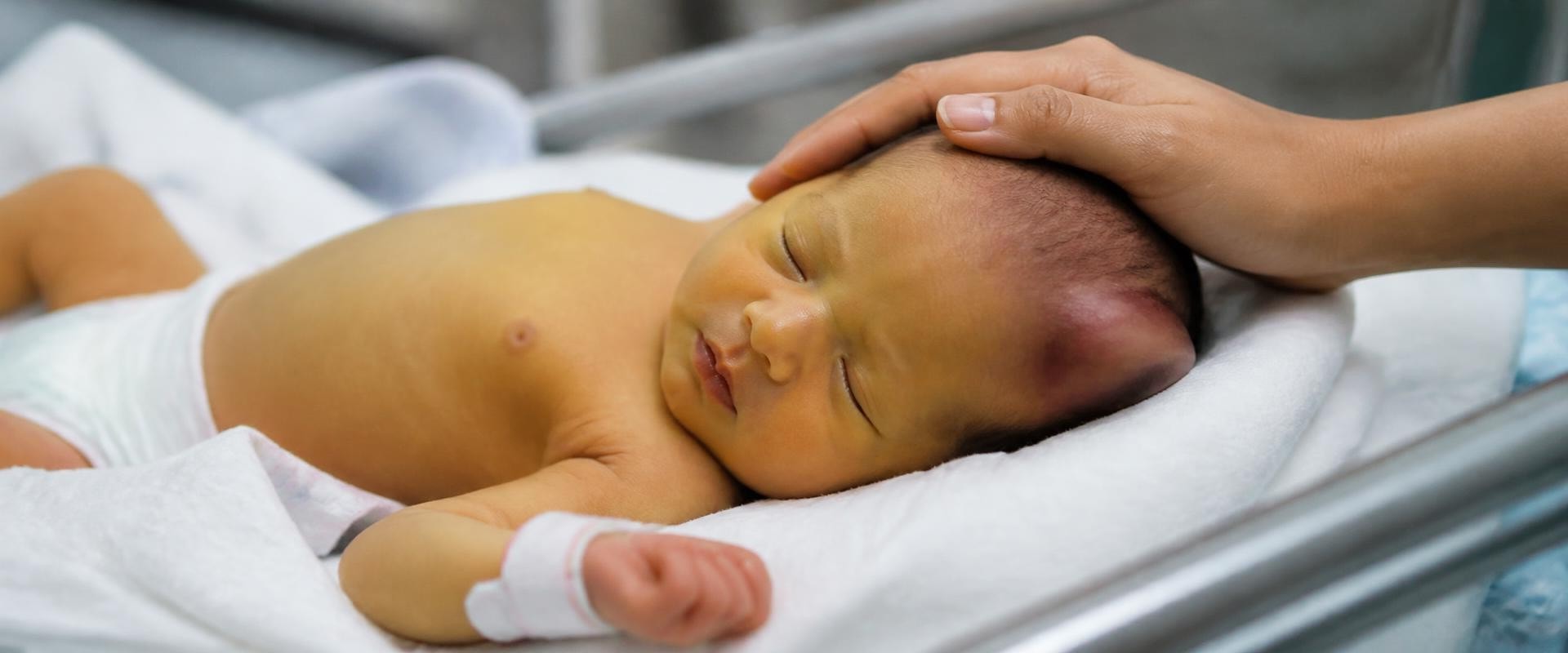
Cephalohematoma increases the risk of newborn jaundice because the blood trapped beneath the scalp eventually breaks down. This releases additional bilirubin into the baby's circulation. Most jaundice can be managed safely, but severe untreated bilirubin elevation can cause permanent neurological injury.
How cephalohematoma affects bilirubin
Bilirubin is a yellow substance produced when red blood cells break down.
The liver processes bilirubin so the body can eliminate it.
Newborns naturally produce bilirubin as their red blood cells turn over.
Their developing livers may not process it as efficiently as adult livers.
A cephalohematoma adds another source of bilirubin.
As the collected blood gradually breaks down, additional bilirubin enters the circulation.
This can increase the likelihood that a baby will develop significant jaundice.
The risk is particularly important during the first days after birth, when bilirubin concentrations commonly rise.
Recognizing newborn jaundice
Jaundice causes yellow discoloration of the skin and the whites of the eyes.
Some newborns become more visibly yellow as bilirubin increases.
However, appearance alone cannot reliably determine the bilirubin concentration.
Skin tone and lighting can make jaundice harder to recognize.
Healthcare professionals therefore use bilirubin measurements to evaluate risk.
A transcutaneous device can estimate bilirubin through the skin.
A blood test provides a total serum bilirubin result when confirmation is necessary.
When jaundice becomes dangerous
Most newborn jaundice does not cause permanent harm.
However, severe hyperbilirubinemia can damage the developing brain.
Acute bilirubin encephalopathy may cause poor feeding, unusual sleepiness, abnormal muscle tone, or a high-pitched cry.
More serious symptoms include seizures, pronounced back arching, and reduced responsiveness.
Permanent bilirubin-related neurological injury is known as kernicterus.
Kernicterus can affect hearing, movement, and coordination.
A cephalohematoma does not directly cause this brain injury.
Instead, the additional bilirubin from the blood collection can contribute to severe jaundice when bilirubin is not adequately controlled.
Why bilirubin screening matters
A baby with a cephalohematoma has an additional risk factor for developing significant hyperbilirubinemia.
Healthcare professionals should consider this when planning newborn follow-up.
Treatment decisions depend on the baby's age in hours, gestational age, bilirubin measurement, and other medical risk factors.
There is no single bilirubin number that applies equally to every newborn.
When bilirubin exceeds the appropriate treatment threshold, phototherapy may be recommended.
Severe cases may require intensive treatment or exchange transfusion.
The goal is to reduce bilirubin before neurological injury occurs.
Supporting safe recovery at home
Parents should follow the hospital's discharge instructions and attend scheduled bilirubin checks.
Adequate feeding supports normal bilirubin elimination.
However, feeding does not replace medical treatment when bilirubin becomes dangerously elevated.
A baby who becomes difficult to wake, feeds poorly, or develops unusual movements needs urgent evaluation.
Seizures or abnormal breathing require emergency care.
Common questions around cephalohematoma and jaundice
Does every cephalohematoma cause jaundice?
No. It increases the risk, but not every affected baby develops significant hyperbilirubinemia.
Can jaundice caused by cephalohematoma be treated?
Yes. Phototherapy and other treatments can reduce bilirubin when medically indicated.
Can cephalohematoma lead to kernicterus?
It can contribute indirectly by increasing bilirubin, but kernicterus is rare and usually preventable with appropriate care.
