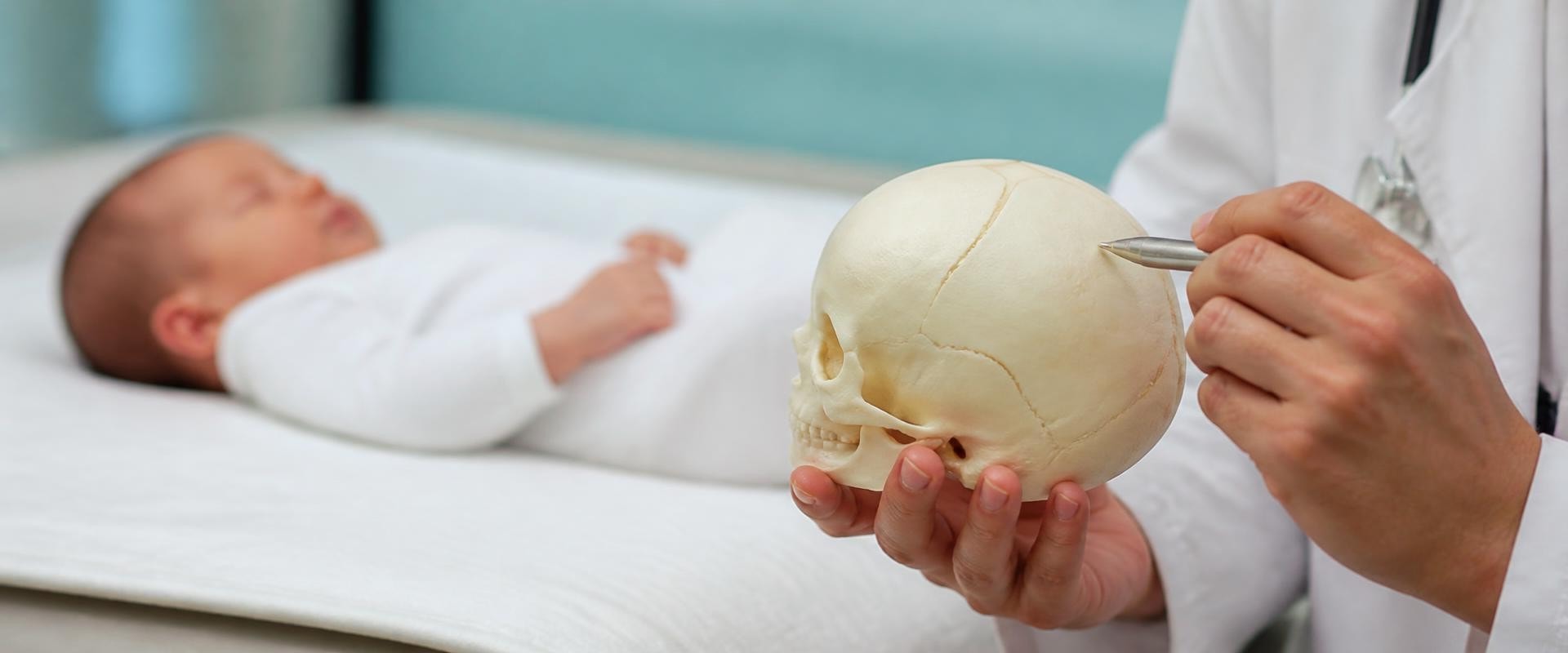
Infant skull fractures are classified according to the pattern and location of the broken bone. Some fractures involve a narrow crack without displacement, while others create a depression or affect sensitive structures near the brain. Identifying the fracture type helps doctors assess the risk of complications and determine appropriate treatment.
How doctors classify skull fractures
The infant skull consists of multiple bones connected by sutures.
During infancy, these bones are still growing and have greater flexibility than adult skull bones.
A fracture occurs when mechanical force causes one or more bones to crack or deform.
Healthcare professionals classify fractures according to their appearance, location, and associated injuries.
They also consider whether the skin remains intact and whether bone fragments have moved out of position.
The classification helps guide imaging, monitoring, and treatment decisions.
A fracture's seriousness cannot always be determined by its external appearance alone.
Linear skull fractures
A linear skull fracture is a narrow break that does not significantly displace the bone.
It is one of the most common fracture patterns in infants.
A baby with an uncomplicated linear fracture may have mild swelling or no obvious symptoms.
These fractures often heal naturally as the skull continues growing.
However, doctors must assess whether bleeding or another injury is present beneath the fracture.
An isolated linear fracture generally has a favorable outlook when no associated brain injury exists.
Treatment often involves observation, caregiver instructions, and follow-up as clinically indicated.
Depressed skull fractures
A depressed fracture occurs when a portion of the skull moves inward.
In newborns, the flexible bone may bend without breaking into separate fragments.
This appearance is sometimes described as a ping-pong fracture.
A visible indentation may be present.
Some mild depressions improve as the skull grows.
More significant depressions can require intervention, particularly when they affect the underlying brain or produce neurological symptoms.
A pediatric neurosurgeon may recommend observation or a procedure to restore the skull's normal shape.
The decision depends on the depth of the depression and associated findings.
Diastatic skull fractures
A diastatic fracture involves widening along a skull suture.
Because newborn sutures have not fused, these injuries are particularly relevant during early childhood.
Some diastatic fractures heal without major complications.
However, certain fractures can widen over time rather than closing normally.
This rare complication is called a growing skull fracture.
It may occur when the membrane covering the brain is torn beneath the fracture.
As the skull grows, the defect can enlarge.
Children with concerning fracture characteristics may need follow-up imaging and specialist evaluation.
Basilar skull fractures
Basilar fractures affect the bones at the base of the skull.
These injuries can involve structures near important nerves and blood vessels.
Possible complications include bleeding, cranial nerve injury, and leakage of cerebrospinal fluid.
Signs may include unusual bruising around the eyes or behind the ears.
Clear fluid drainage from the nose or ears can also be concerning.
Basilar skull fractures are serious injuries requiring urgent medical assessment.
Treatment focuses on identifying and managing associated complications.
Why associated brain injuries matter
A skull fracture does not automatically mean that the brain has been injured.
However, bleeding may occur inside the skull after significant trauma.
Epidural and subdural hematomas are examples of intracranial bleeding.
Large or expanding collections of blood can place pressure on brain tissue.
These complications may require emergency neurosurgical treatment.
The long-term outlook depends heavily on whether neurological injury occurred.
Common questions around fracture types
Which infant skull fracture is usually the least complicated?
An isolated linear fracture without associated brain injury generally has a favorable prognosis.
Can a depressed skull fracture heal without surgery?
Some mild depressions improve naturally, while others require treatment.
Why are basilar fractures concerning?
They can affect nerves, blood vessels, and protective structures surrounding the brain.
For more information, visit: https://birthinjuryadvocate.com/birth-injuries/infant-skull-fracture/
