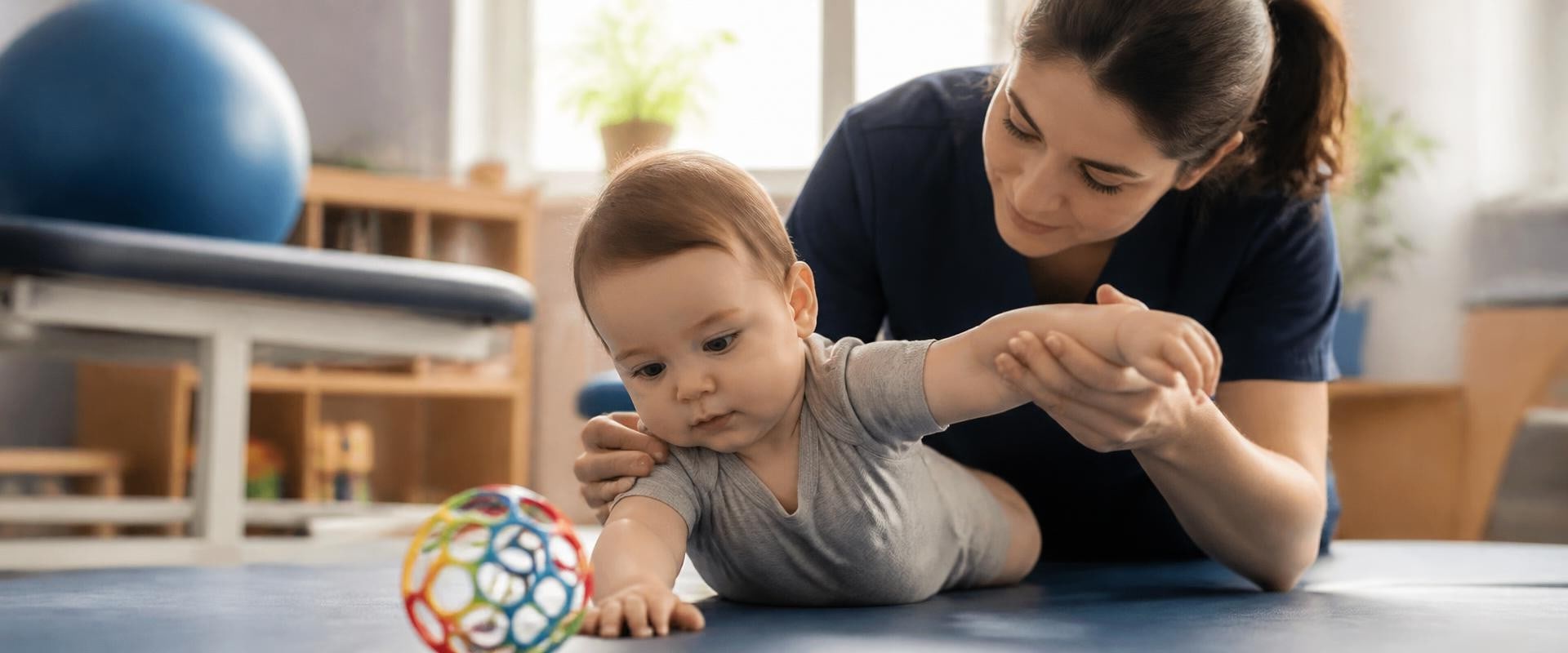
Treatment for brachial plexus birth injuries depends on the location and severity of nerve damage. Mild injuries may improve naturally, while severe injuries can require surgery. Therapy helps maintain flexibility and supports functional development throughout recovery.
How treatment begins
The first step is a careful medical assessment.
Doctors identify which arm movements are affected and whether recovery has begun.
The treatment plan may include observation, rehabilitation, and specialist follow-up.
Mild stretching injuries often improve during infancy.
However, families should not assume that all weakness will disappear without treatment.
Regular examinations help determine whether the child is progressing as expected.
Physical therapy during infancy
Physical therapy is an important part of care.
Weak muscles may allow opposing muscles to become tight.
Over time, this imbalance can restrict joint movement.
A therapist may teach caregivers gentle range-of-motion activities.
These exercises help maintain flexibility while the nerves recover.
The program must be tailored to the baby's age and medical condition.
Parents should avoid forceful stretching or exercises that have not been recommended by the care team.
Occupational therapy and everyday movement
Occupational therapy focuses on practical movement and function.
As a child grows, therapy may support reaching, grasping, and using both arms during play.
The therapist may suggest age-appropriate activities that encourage movement.
Children with persistent weakness may need additional support for daily tasks.
Treatment goals change as the child's abilities develop.
When nerve surgery becomes an option
Many infants show meaningful spontaneous improvement during the first months.
However, persistent severe weakness can suggest structural nerve damage.
Specialists may consider nerve reconstruction when important movements fail to recover adequately.
Surgical evaluation often occurs during the first three to six months, although timing depends on the injury.
The decision may involve clinical findings, imaging, and other tests.
Not every child with residual weakness requires surgery.
Nerve grafting and nerve transfers
Nerve grafting involves using a healthy nerve segment to bridge damaged tissue.
The graft provides a pathway for regenerating nerve fibers.
A nerve transfer redirects a functioning nerve toward a muscle that has lost its original nerve supply.
These procedures aim to restore useful movement.
They cannot guarantee full recovery.
Results depend on the injury, the muscles involved, and the timing of treatment.
Long-term shoulder and arm health
Some children continue to experience weakness after nerve recovery.
Others develop tightness around the shoulder.
Persistent muscle imbalance can affect joint development.
Therapy may help preserve movement and support daily function.
Selected children may require later orthopedic procedures.
These can include tendon transfers or other interventions designed to improve positioning and movement.
The need for additional treatment varies considerably.
What recovery may look like
Mild neurapraxia often improves within weeks or months.
More serious nerve injuries may require a longer recovery period.
Nerve regeneration is gradual.
Functional gains can continue as the child develops, especially with appropriate rehabilitation.
However, severe injuries may leave permanent limitations.
The long-term outlook depends on the specific nerve damage and the child's response to treatment.
Common questions around treatment and recovery
Can physical therapy repair a torn nerve?
No. Therapy supports movement and joint health, but it cannot reconnect a completely torn nerve.
When is surgery considered?
Specialists may consider surgery when significant recovery is absent during early infancy.
Can a child recover arm movement after nerve surgery?
Yes, some children gain useful movement, although results vary and complete recovery is not guaranteed.
