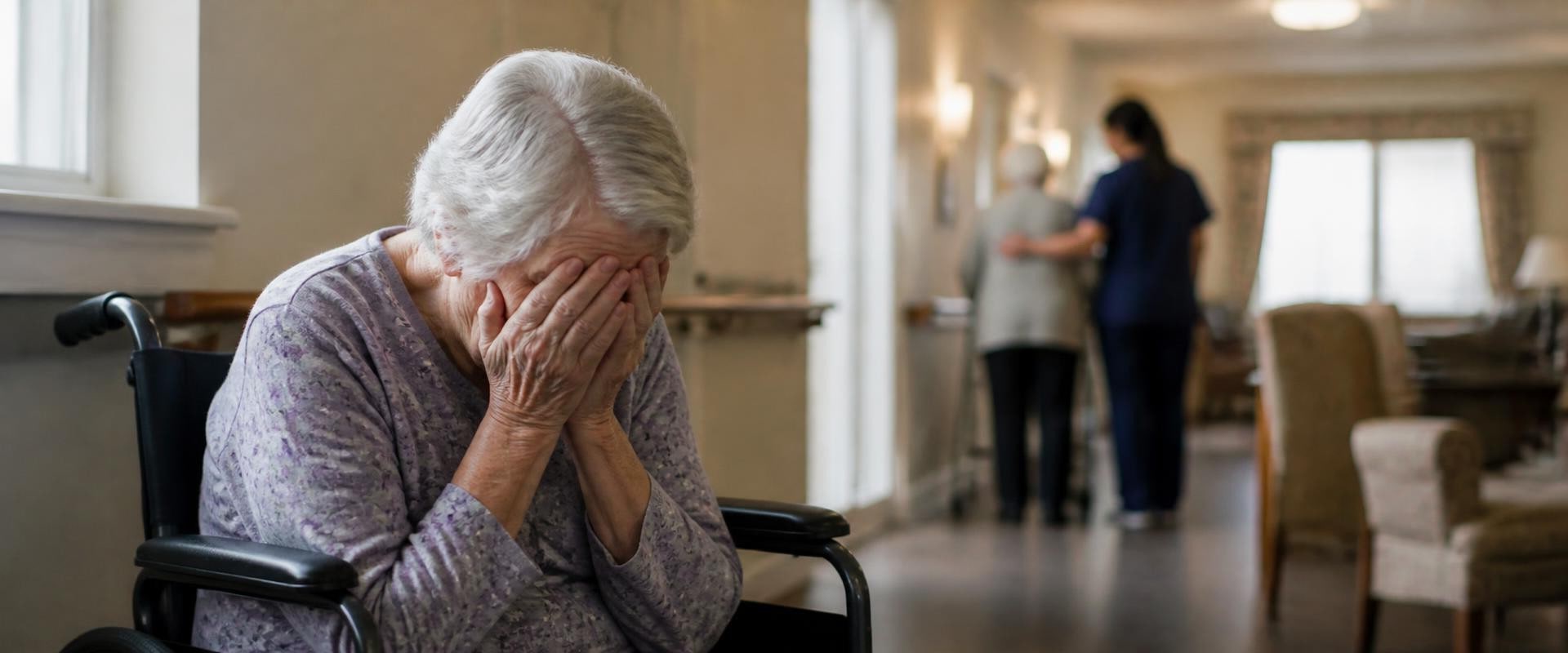
Most sexual abuse claims against an institution start with an uphill task. Before a school, church or business can be held responsible, the survivor usually has to prove that the institution itself did something wrong, such as hiring carelessly or ignoring warning signs. Nursing home claims in Illinois can begin from a different place. A specific statute puts responsibility for staff conduct directly on the facility's owner and licensee.
That matters for residents and their families. You do not need to have reported the abuse, and nobody needs to have been charged. A civil claim focuses on what the facility operator knew, what it should have known and what it did.
What Section 3-601 Says
The Illinois Nursing Home Care Act contains a liability provision at 210 ILCS 45/3-601. Under it, the owner and licensee of a facility are liable to a resident for any intentional or negligent act or omission of their agents or employees that injures the resident.
Reading It Closely
Three parts of that sentence carry weight.
First, the liability runs to the owner and licensee, the parties that run the facility and hold its state license. Second, it covers acts by agents or employees, the people the facility puts in contact with residents. Third, it reaches both intentional and negligent conduct, along with omissions, which are failures to act.
Taken together, liability attaches to the owner and licensee for what their staff did. That is a stronger starting position than ordinary negligence, where you must first establish the institution's own fault before it can be held to account.
Other Claims That Can Run Alongside
A nursing home sexual abuse claim is usually brought against the facility's owner and licensee under the Nursing Home Care Act. Claims for negligent hiring and negligent supervision can run alongside the statutory claim. Which of these fits a particular case is a question about the facts.
The Act also gives residents rights of their own, including the right to be free from abuse and neglect. Those protections reflect how dependent many residents are on the people caring for them.
Public Bodies and Private Operators
The organization responsible is usually private. That means the Tort Immunity rules that govern claims against Illinois public bodies do not apply in the same way. The liability questions are the ordinary institutional ones.
Why Residents Often Stay Silent
A strong statute only helps if the abuse comes to light, and in nursing homes that is often the hardest part. Many residents rely on staff for daily care and may fear what will happen if they complain about someone who still looks after them. Some live with memory loss or have difficulty speaking. Others feel embarrassed or worry they will not be believed.
Because of this, family members and regular visitors are often the first to notice that something is wrong. Signs can include new fear of a particular caregiver, withdrawal from activities, sudden changes in mood or behavior or injuries that no one can explain. Writing down what you see, and when, can help if questions arise later.
The Paper Trail Outside the Facility
Illinois licenses and inspects nursing homes, so state survey and complaint records exist alongside the facility's own files. The Illinois Department of Public Health (IDPH) takes nursing home complaints through its Central Complaint Registry at 1-800-252-4343 (TTY 1-800-547-0466). Anyone can file, and IDPH does not require your name. When IDPH finds a violation of the Nursing Home Care Act, it sends the facility a notice of the violation. Records like these can help show what the operator knew and when.
Timing Is Not Something to Put Off
The deadline for an injury claim by an adult in a nursing home case is generally two years. Different rules apply if the resident has since died. If something happened recently, or you are asking for a parent or relative, it is worth asking soon.
Common Questions
Do I need to have reported it? No. A civil claim requires no police report, no charge and no conviction. Most of the people we speak with never reported.
Does the statute replace a negligence claim? Not necessarily. The Nursing Home Care Act claim is usually the core of the case, and negligent hiring and supervision claims can run alongside it, depending on the facts.
What does it cost? Nothing up front. These cases are handled on a contingency fee, so there is no fee if there is no recovery.
What Happens If You Contact Us
Asking a question sets nothing in motion. You talk with a person, not a form or script, and you do not have to describe what happened to have the conversation. We look into which facility was responsible, what it knew, what records exist and whether a claim can still be brought. That costs you nothing. We tell you plainly what is possible, and the decision is yours. If you choose not to go forward, that is the end of it, and what you told us stays confidential. If you go forward, we carry the filings, deadlines, records and insurers, and steps can be taken to protect the resident's identity in the court record.
Speak With an Illinois Nursing Home Abuse Lawyer
Ervin Nevitt is a partner at Coplan + Crane and was admitted to the Illinois bar in 2014. Calls to (708) 671-6858 are answered 24 hours a day, every day. The office is at 60 W Randolph St, Suite 333, Chicago, IL 60601.
For immediate support, the RAINN National Sexual Assault Hotline is free and confidential at 1-800-656-4673, 24 hours a day. If someone is in immediate danger, call 911. Calling a hotline does not affect your legal options.
Attorney advertising. This post is general information, not legal advice.
