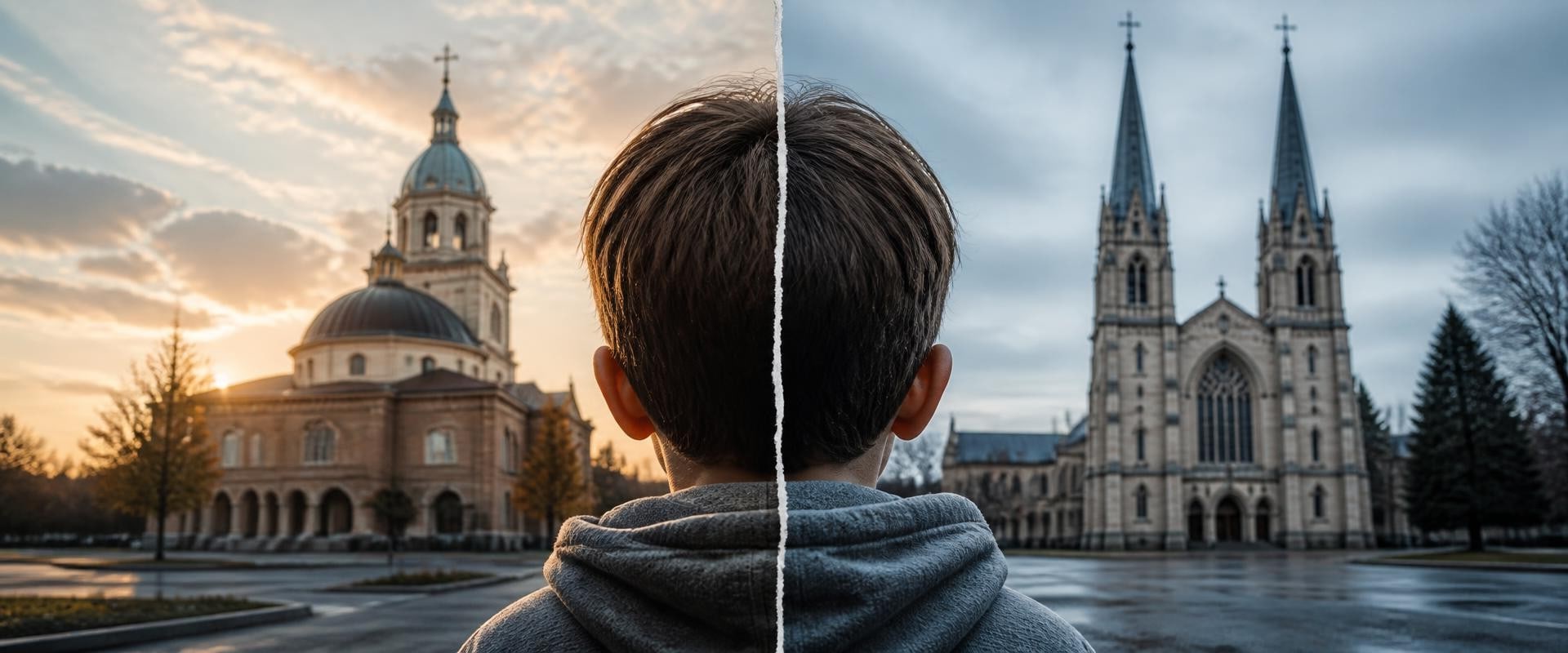
For many survivors in Aurora, the abuse happened in a parish, a church school, or a youth ministry. Some have held it inside for most of their lives. If that sounds familiar, it is very often not too late to ask about a civil claim, and you do not need to have reported it.
What governs a claim is your age at the time, who was responsible, and the facts. Whether anyone believed you then does not decide it. Attorney Ervin Nevitt, a partner at Coplan + Crane, reviews these cases. He is registered with the Illinois bar (6319808) and was admitted in 2014.
Aurora sits in two dioceses
Aurora is divided between two Catholic dioceses. The part of the city in Kane County falls under the Diocese of Rockford. The parts in DuPage, Will, and Kendall counties fall under the Diocese of Joliet.
In 2023, the Illinois Attorney General released a report on clergy abuse across the state. It named 24 clerics in the Diocese of Rockford and 69 in the Diocese of Joliet with substantiated child sexual abuse claims. The report did not cover every survivor, but it shows that substantial records exist. Records like these often play a central role in a civil case.
When the priest has died
Many survivors assume their case ended when the person who abused them died. It did not. A claim can still proceed, because these cases are usually brought against the institution that placed that person in a position of trust, not against the individual.
Where a claim would be filed
Aurora spans Kane, DuPage, Will, and Kendall counties. Most civil claims are filed in the circuit court of the county where the abuse happened. Claims against the State go to the Illinois Court of Claims.
If a public school or another public body shares responsibility, the Illinois Tort Immunity Act and special notice requirements also apply. Those rules do not apply to a private organization like a church. It is the first thing to check, and it is easy to get wrong.
Common Questions Around Clergy Abuse Claims in Aurora
It was decades ago. Is there any point in asking? Yes. Time matters, but your age then, who was responsible, and the facts govern the claim. People regularly assume they are out of time and turn out not to be.
Do I have to commit to anything if I call? No. You can ask what is possible and stop there.
Will my name become public? If you go ahead, steps can be taken to protect your identity in the court record.
Support whether or not you call a lawyer
Mutual Ground in Aurora runs a 24-hour sexual violence hotline at 630-897-8383. RAINN is also available at 1-800-656-4673, free and confidential, 24 hours a day.
What a first conversation looks like
Nothing is set in motion by a question. You speak with a person, not a script, and you do not have to describe what happened. We look into which diocese or institution was responsible, what it knew, and what records exist. That work costs you nothing.
We then tell you plainly what is possible. If you decide not to go ahead, it ends there, and what you told us stays confidential. If you go ahead, we carry the filings, deadlines, records, and the institution's insurers.
Call (708) 671-6858 for a free, confidential case review or visit https://survivorsofabuseil.com/sexual-abuse-lawyer-aurora-il//
