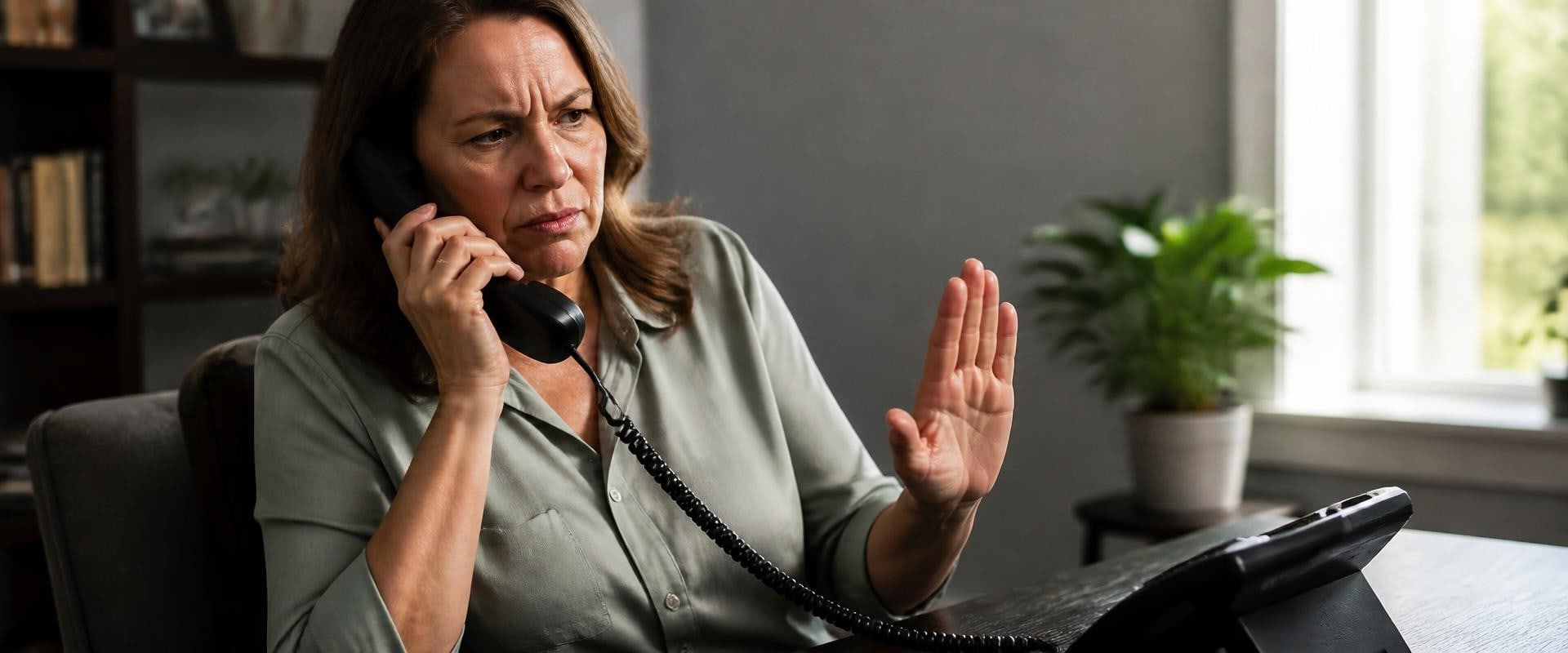
Washington regulates telephone marketing through rules governing when businesses may call, what information they must provide, and how they must respond to consumers who want calls to stop. RCW 80.36.390 establishes important protections for residents receiving unsolicited telephone solicitations.
What Washington Requires From Telephone Solicitors
Telephone marketing remains a common way for organizations to reach potential customers and request donations.
Washington recognizes that legitimate communication must be balanced against the privacy interests of telephone users.
RCW 80.36.390 applies to defined telephone solicitations involving commercial and nonprofit organizations.
The law covers communications using live representatives, artificial voices, and recorded messages.
It also contains exclusions for certain requested communications, qualifying membership contacts, polling activities, and business-to-business calls.
Legal calling hours in Washington
Covered telephone solicitations generally cannot be received before 8 a.m. or after 8 p.m. in the recipient's local time zone.
This restriction applies to the recipient's local time, not the time where the calling organization operates.
For example, a company operating on the East Coast must consider Washington's local calling hours before contacting a Washington resident.
A call received after the permitted period may support enforcement or a civil claim when the relevant statutory conditions are met.
Local Spotlight: Washington's Right to End Unwanted Calls
Washington places specific duties on telephone solicitors when consumers express their preferences.
Callers must identify themselves, the organization they represent, and the purpose of the call within the first 30 seconds.
If a recipient indicates that the conversation should end, the solicitor must disconnect within 10 seconds.
These requirements give consumers greater control over unsolicited conversations.
What happens after a do not call request?
When a recipient asks not to receive additional solicitations, the solicitor must follow several requirements.
The organization must explain that the contact information will be removed from its calling lists for at least one year.
It must end the current call within 10 seconds and refrain from additional covered solicitations to the requested numbers during that period.
The statute also restricts sharing the recipient's contact information, subject to a limited exception for returning a list to its original provider.
Consumers should keep a record of the removal request because later calls may become relevant evidence.
How the Federal Do Not Call Registry Fits In
Washington law also prohibits initiating covered telephone solicitations to numbers registered on the federal Do Not Call Registry.
This gives residents an additional legal basis for challenging certain unwanted marketing calls.
Registration does not block every possible telephone communication.
Calls outside the legal definition of solicitation, or within applicable exceptions, may still occur.
The registry also cannot physically prevent dishonest callers from dialing a number. It establishes legal restrictions and supports enforcement.
Why documenting violations matters
Telephone records can establish whether a call occurred outside permitted hours or after a removal request.
Consumers should record the date, local time, caller's name, and organization when available.
Repeated violations may support a private civil action under RCW 80.36.390.
That provision allows qualifying claimants to seek damages and relief preventing further violations.
Common Questions Around Washington Telemarketing Laws
Can telemarketers call after 8 p.m.?
Covered telephone solicitations cannot be received after 8 p.m. in the recipient's local time zone.
Must telemarketers identify themselves?
Yes. Washington requires identification of the caller, organization, and purpose within the first 30 seconds.
How long must a company honor a removal request?
The applicable state provision requires at least one year for covered telephone solicitation removal requests.
Can repeated violations lead to a lawsuit?
Yes. RCW 80.36.390 provides a private civil remedy for people aggrieved by repeated violations.
For more information, visit: https://robocalllawsuit.com/autodialer-laws/washington/
