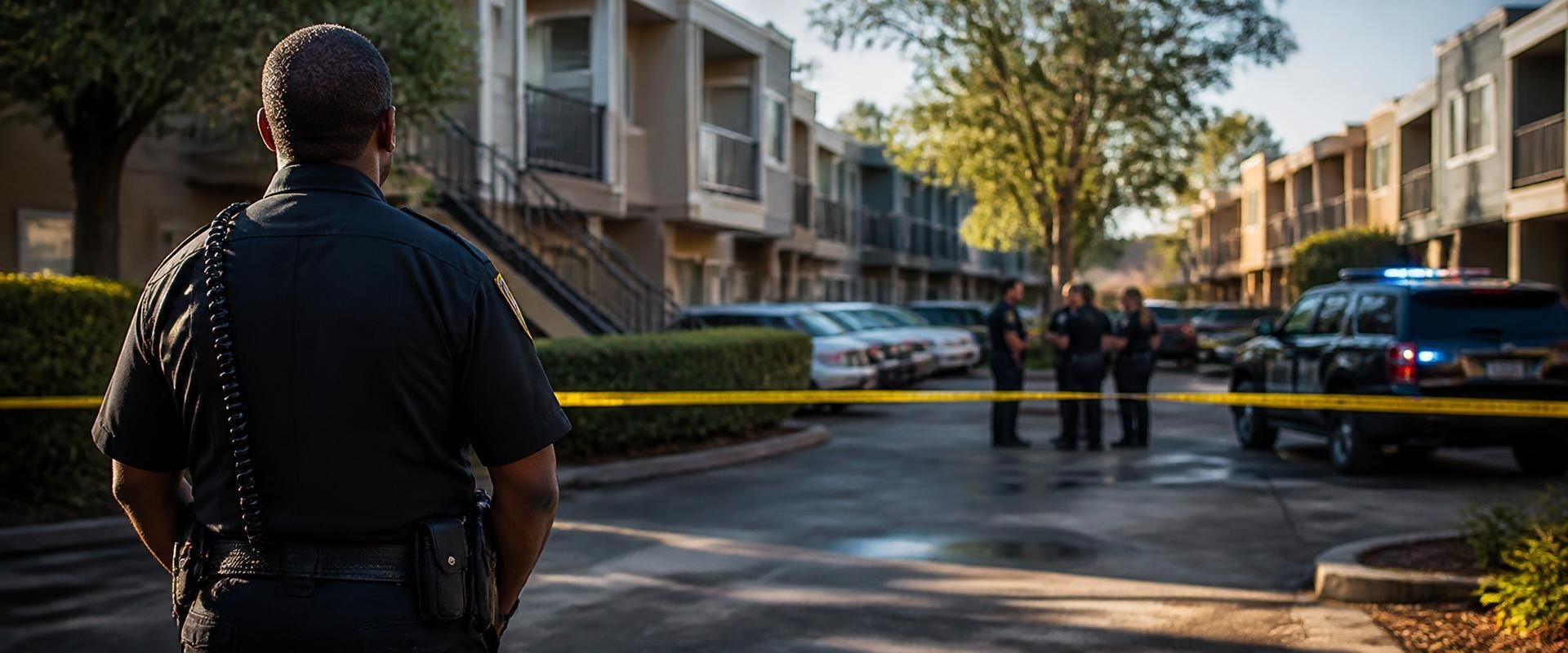
When someone is shot or assaulted at an apartment complex, the first instinct is to focus on the attacker. Police investigate, prosecutors decide on charges, and the criminal case takes its course. But the person who committed the crime is often not the only party whose choices led to the harm, and in many cases the attacker has no money to compensate the victim anyway.
A civil negligent-security claim looks at a different question: who was responsible for keeping the property reasonably safe, and did they do their job? At a typical apartment complex, the answer may involve several companies at once.
The property owner
The owner of the complex invites residents and their guests onto the property. With that invitation comes a duty to take reasonable steps toward their safety. Owners decide the security budget, approve or reject repairs, and set the policies that determine whether a gate gets fixed or a guard gets hired.
That said, owners are not insurers of everyone's safety. They are not automatically liable for every crime on their grounds. Liability generally depends on whether the attack was foreseeable, usually because of prior crime at or near the property, and whether the owner ignored security problems that were obvious and fixable.
The management company
Many complexes are owned by one entity and run by another. The management company often handles leasing, maintenance requests, tenant complaints, and day-to-day operations. If tenants reported a broken lock, a dark walkway, or a string of break-ins, those reports frequently landed on the management company's desk first.
When a management company receives warnings and does nothing, it may share responsibility for what happens next. Its own records, including work orders and complaint logs, can be some of the most important evidence in the case.
The security company
Some complexes contract with an outside firm for guards, patrols, or monitoring. That contractor may be accountable if it failed to perform the services it agreed to provide. Examples include guards who were scheduled but absent, patrols that skipped parts of the property, or monitoring that never happened. If a complex advertised security that the contractor did not actually deliver, both may face questions about the gap.
Why naming the right parties matters
Identifying every responsible party is about more than assigning blame. Each defendant may carry its own insurance, and catastrophic injuries from shootings often exceed what a single policy will pay. A thorough investigation into who owned, managed, and secured the property helps make sure the full range of available coverage is considered.
It also shapes the evidence. The owner's budget decisions, the manager's maintenance backlog, and the contractor's staffing records each tell part of the story.
The attacker's identity does not decide the case
It does not matter whether the person who caused the harm was another tenant, a resident's guest, or a stranger who walked through a broken gate. The claim centers on the property's own conduct: did it leave a predictable danger unaddressed? If it did, the owner and management may be liable regardless of who pulled the trigger.
What about suing the attacker directly?
A victim can usually bring a civil claim against the person who committed the crime as well. In practice, that rarely produces meaningful compensation, because most attackers have no assets or insurance that would cover a violent act. A criminal conviction may include a restitution order, but those orders often go unpaid. The property owner, management company, and security contractor are different. They are businesses with insurance policies written to cover claims arising from the property. That is why negligent-security claims are often the most realistic path to compensation for a victim's medical bills and lost income.
What about the lease?
Some leases include language saying the complex is not responsible for crime. Such language frequently fails to excuse a landlord's own carelessness. Do not decide you have no case because of fine print. Have a lawyer review it.
Damages available from responsible parties
Victims may recover medical expenses and lifetime care, lost earnings, and pain and suffering. Families who lose a loved one may pursue wrongful-death damages. The Haggard Law Firm's results include a $16 million settlement in a Jacksonville apartment-complex shooting and a separate $8 million settlement after a young man lost his life. Those figures are gross recoveries, before fees and costs.
Start with a free review
Records that show who knew what, and when, can disappear quickly. Surveillance footage and crime-call records are often gone within days. The firm, which has handled nearly 500 negligent-security cases and obtained the $102.7 million record verdict, will review your situation at no cost. There is no fee unless it wins. Call (305) 446-5700 or visit https://crimevictim.attorney/negligent-security/apartment-complex/.
Attorney advertising. Content here is general and should not be relied on as legal advice for any specific situation, and getting in touch does not make you a client. Every case turns on its own facts, and earlier results are no guarantee of a similar result.
