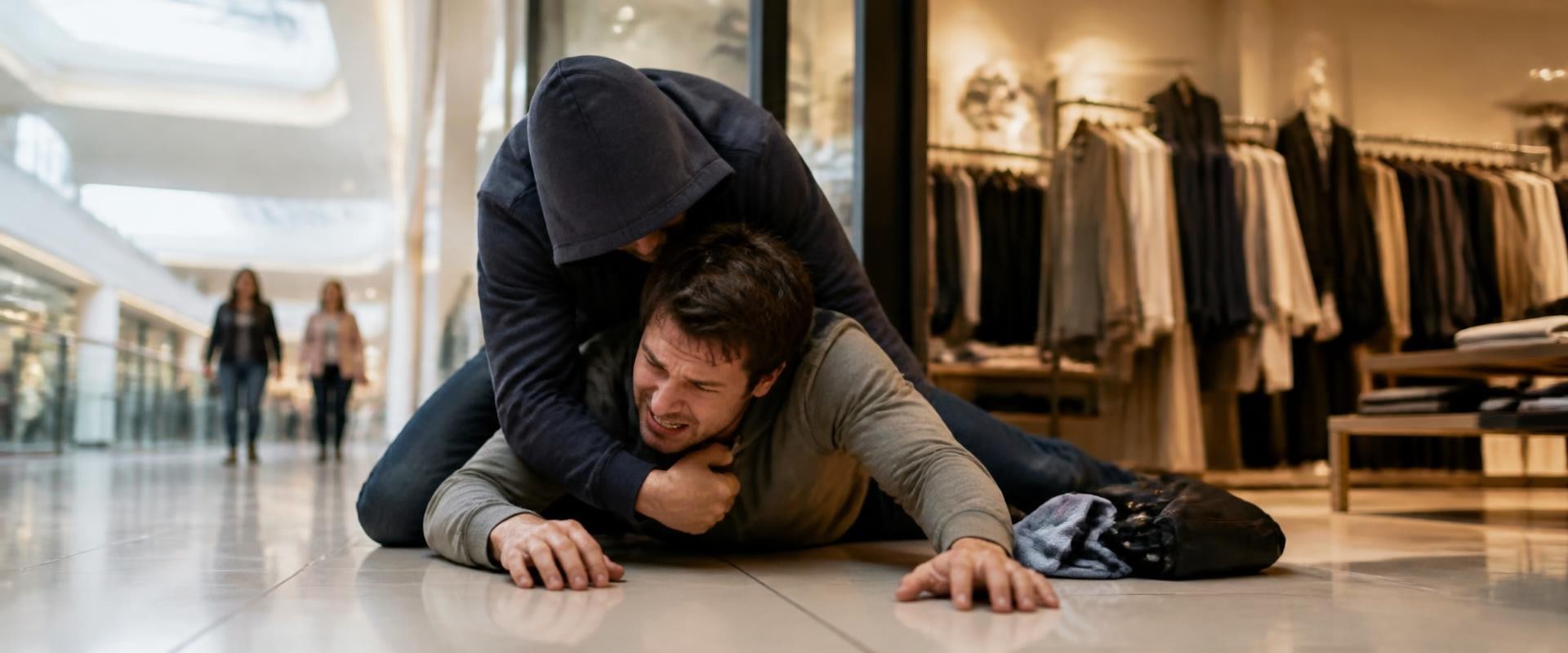
Picture a robbery at a jewelry counter, a fight that spills into a clothing store, or a shooting just inside a department store entrance. The victim was clearly hurt at the mall, but the attack happened within the walls of a single business. Who is responsible for the security that failed?
It is one of the most common questions in shopping center cases, and the answer is rarely as simple as "the mall" or "the store." Often, more than one company played a part.
Why malls have so many decision-makers
A modern shopping center is a patchwork of businesses. One entity may own the land and buildings. A separate property management company may run daily operations, hire vendors, and handle complaints. Dozens of retailers lease individual spaces and run their own operations inside them. An outside security contractor may provide guards for common areas, and some stores hire their own loss-prevention staff on top of that.
Each of these players makes choices that affect how safe customers are. That is why a single mall case may name the landlord, its management firm, one or more retail tenants, and the guard company.
Control is the key question
When an attack happens inside a particular store, both the store operator and the mall owner may share responsibility. The deciding factor is often who controlled security in the place where the attack happened.
Leases and service contracts usually spell this out. A lease might make the mall responsible for common areas, parking, and building entrances, while leaving each tenant responsible for security inside its own space. A security contract might cover patrols of hallways and lots but not the interior of stores. Other arrangements share duties in more complicated ways. Working out who controlled what, and who made which decisions, requires gathering and reading those documents.
Examples of how responsibility can divide
- An assault in a mall corridor may point primarily to the owner, the management company, and the security contractor responsible for common areas.
- A robbery at a store's register may implicate the store operator, especially if it had a history of robberies and did nothing to address them.
- An attacker who entered through an unsecured service door may raise questions about whoever was responsible for that entrance, which could be the mall, the tenant, or both.
- An attack in the parking lot of a store or center may involve whichever business controlled and secured the lot. Businesses often owe a duty in the parking areas their customers use.
These are illustrations, not rules. The real answer depends on the documents and the facts.
Why getting the defendants right matters
Naming every party that shares responsibility protects the victim's ability to recover fully. Each business typically has its own insurance, and serious violent injuries can exceed what one policy covers. Leaving out a responsible party can mean leaving coverage on the table.
It also matters for the evidence. The mall's incident reports, the store's own security records, and the guard company's logs each capture a different view of what happened and what each party knew beforehand.
Victims should also expect some finger-pointing. Once a claim is filed, the mall may argue that the store was in charge of security inside its space, the store may say the mall's guards should have stopped the attacker, and the security contractor may claim it was never hired to cover that area. Leases and service contracts often include clauses that shift costs between these companies. Those disputes are mostly between the defendants. Naming everyone who may bear responsibility keeps the victim's claim from getting lost in the middle.
The underlying duty is the same
Whoever controlled security, the core legal question does not change. Malls and stores invite the public onto their property and owe a duty to provide reasonable security against foreseeable crime. Reasonable security generally means trained personnel, surveillance, lighting, and emergency response, scaled to the property's size, traffic, and history of theft, fights, or violence.
Failures often include too few security staff for the property, cameras that are broken or unmonitored, unsecured entrances and loading areas, no coordinated active-threat plan, and a known pattern of crime that management ignored.
What victims may recover
A claim may seek medical treatment and future care, lost income, and compensation for emotional trauma, along with wrongful-death damages if the attack was fatal.
Let the firm identify who is responsible
The Haggard Law Firm investigates each party that owned, managed, operated, or secured a property. It has handled nearly 500 negligent-security cases and won a $102.7 million verdict, the largest negligent-security verdict in U.S. history, involving inadequate security at a Miami nightclub and shopping center. That is a gross figure before fees and costs.
Surveillance video and incident records can vanish quickly, so it pays to call soon. Cases are handled on contingency, with no attorney's fees unless the firm recovers compensation for you. Reach the firm at (305) 446-5700 for a free, confidential review or visit https://crimevictim.attorney/negligent-security/shopping-mall-retail/.
Attorney advertising. General information only; this is not legal advice for any particular situation and does not make you a client of the firm. Results in other cases do not guarantee the outcome of yours.
