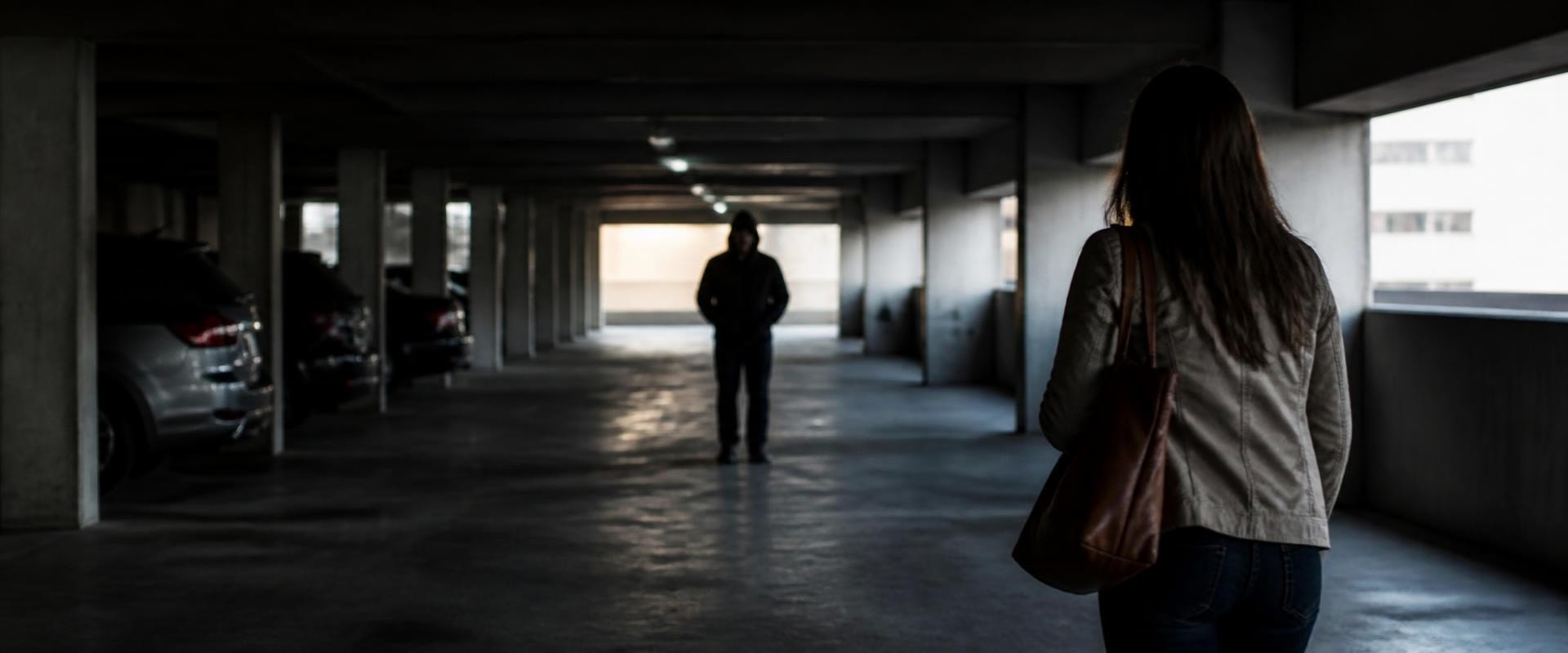
Ask almost anyone where they feel least safe during an ordinary day, and a parking garage at night is likely to come up. That instinct is well founded. Parking areas are some of the most common settings for robberies, carjackings, assaults, and shootings, and the reasons are not mysterious.
What matters for victims is that the companies that own and run these spaces understand those reasons too. When they know the risks and fail to address them, they may be legally responsible for the harm that follows.
Three features that make parking areas dangerous
Isolation. Unlike a store aisle or a hotel lobby, a parking structure often has no employees nearby and few other people around, especially on upper levels or late at night. A person walking to a car may be completely alone.
Poor lighting. Many lots and garages are dimly lit to begin with, and burned-out fixtures can go unreplaced for weeks. Shadows between parked cars and in stairwells give attackers places to wait unseen.
Easy entry and escape. Open entrances, multiple exits, and ramps leading directly to roads let criminals get in, commit a crime, and leave in seconds. Without gates or attendants, there is nothing to slow them down.
Together, these features make parking structures frequent sites of violent crime. Isolated, poorly secured parking areas are recognized as common locations of foreseeable, preventable attacks.
Owners typically know
Parking areas are easy targets, and those who own and operate them typically know it. Many have records of prior incidents: car break-ins, purse snatchings, armed robberies, or assaults. Police may have been called to the property repeatedly. Customers or tenants may have complained about dark levels or broken cameras.
That knowledge is what turns a general risk into a legal obligation. Anyone in charge of such a space is expected to protect it in proportion to its risk, and the more crime a property has seen, the more is expected of them.
What foreseeability looks like in practice
In a negligent-security case, the key question is whether the crime was foreseeable. When a lot has poor lighting, no working cameras, no access control, and no patrols despite a crime history, a shooting there is often both foreseeable and preventable.
Evidence of foreseeability can come from many sources:
- Police reports and calls for service at the address
- The property's own incident logs and security reports
- Complaints from customers, tenants, or employees
- Crime data for the surrounding area
- Internal emails or meeting notes about safety concerns
A pattern in these records shows the owner had reason to act.
The history does not always have to involve the exact same kind of crime. A string of car break-ins and thefts can signal that criminals view the lot as an easy target, which makes more serious crimes more predictable. Crime on neighboring blocks, at an adjoining business, or in a garage across the street may also be relevant, depending on the circumstances. A lawyer will typically gather years of records rather than just the weeks before the attack, because patterns often take time to emerge.
What reasonable security might have included
The failures behind parking area attacks are usually basic: inadequate or broken lighting on levels, ramps, and stairwells; missing or broken cameras; no gates, access control, or attendants; no patrols despite known crime; and elevators or stairwell doors left broken in ways that strand or expose people. Fixing them is often far less expensive than the harm that results when they go unaddressed.
Who may be liable
Responsibility generally rests with whoever owned or operated the parking area and controlled its security. That might be a standalone garage company, or a business attached to the lot, like a shopping center, hotel, residential community, or medical campus. A management company can also share responsibility.
Recovering for your injuries
Gunshot wounds and violent assaults in parking areas frequently cause catastrophic injuries. A negligent-security claim can pursue the cost of treatment and long-term care, wages the victim can no longer earn, and the pain the attack caused. Families who lose someone may bring a wrongful-death claim.
The Haggard Law Firm has handled nearly 500 negligent-security cases. Its results include a $3.9 million verdict for the family of a teen who was shot in an apartment parking lot, and a $102.7 million verdict, the largest negligent-security verdict in U.S. history. These are gross amounts, and every case is different.
Do not let the evidence disappear
Video from parking areas can be overwritten within days, and lights and gates may be repaired soon after a serious crime. A lawyer can move to preserve that evidence before it is lost.
The firm works on contingency, so there is no fee unless it wins. Call (305) 446-5700 for a free and confidential review of your case.
This content is attorney advertising and general information only. It is not legal advice and creates no attorney-client relationship. Prior results do not guarantee a similar outcome.
