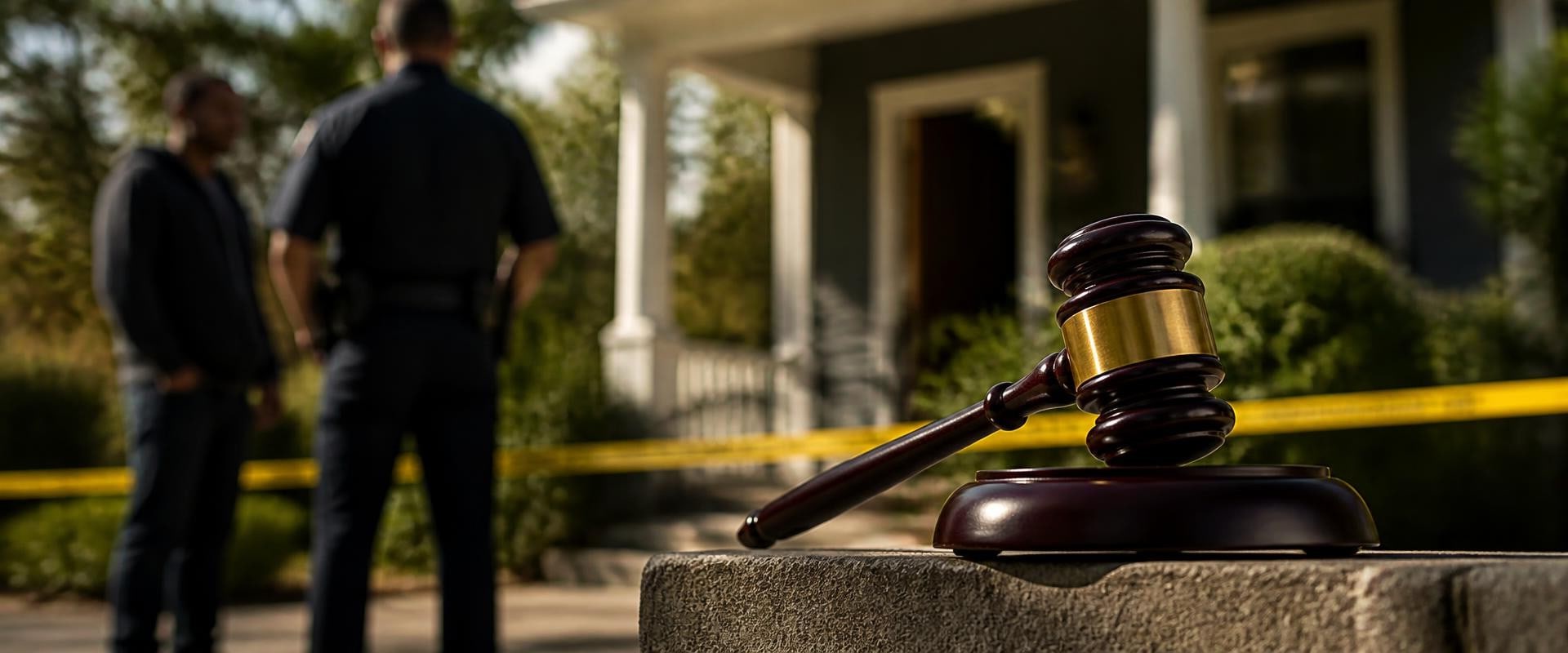
Every negligent-security case eventually reaches the same crossroads: was the attack the kind of thing the owner should have anticipated? States answer that question in different ways. Washington's approach places significant weight on a property's actual history, which makes understanding the standard essential for anyone hurt by violence on someone else's premises.
The starting point: Nivens
In Nivens v. 7-Eleven Hoagy's Corner, the Washington Supreme Court addressed a customer who was assaulted at a convenience store. The justices held that a business must act reasonably to guard its invited customers against criminal acts by others when those acts are reasonably foreseeable. Their reasoning borrowed from the Restatement's Section 344, a widely cited rule for businesses that welcome the public onto their premises.
Nivens also made clear that this duty does not mean every business must hire guards or prevent all crime. The obligation is to respond reasonably to the risks the owner knew about or should have known about.
What "foreseeable" means here
Washington courts generally look for evidence that the owner had notice an attack like the one at issue was likely. The most common way to show that is through prior similar incidents: earlier assaults, robberies, shootings, or stabbings on or near the property. Other kinds of notice can matter too, such as a specific threat against a person, an ongoing fight the staff saw developing, or repeated warnings from tenants or customers.
Later refinement: McKown
The Washington Supreme Court revisited the standard in McKown v. Simon Property Group, a case stemming from a shooting at a Tacoma shopping mall. The court explained that prior incidents are evaluated by looking at factors such as where they happened, what kind of crimes they were, and how frequent or extensive they were, compared with the attack in question. Isolated or very different crimes may not be enough; a pattern of comparable violence carries far more weight.
That makes careful investigation critical. The specifics of earlier incidents, not just their number, can determine whether a case moves forward.
Why location details matter
In Washington, a robbery in the far corner of a large parking lot years ago may be weighed differently from a series of recent assaults right outside the entrance where the victim was attacked. Lawyers often map earlier incidents by date, place, and type to show how closely they track the attack at issue. Time of day, the presence or absence of staff, and whether earlier crimes involved weapons can all strengthen the comparison.
A question for the jury
Once there is enough evidence to support it, whether a crime was reasonably foreseeable is generally treated as a factual question for a jury. Judges decide whether the evidence clears the threshold; jurors then weigh it. Building a detailed, documented history of the property is therefore central to getting a case in front of a jury.
Evidence that helps establish foreseeability
Investigations in Washington cases commonly include:
- Dispatch logs and police reports covering the address and nearby blocks
- The property's internal security reports and manager logs
- Earlier litigation, insurer files, or city enforcement tied to the site
- Written gripes from tenants, shoppers, or workers about violence or failing safety equipment
- Testimony from former employees about what management knew
- Expert analysis comparing earlier incidents with the attack
Beyond foreseeability
Proving the owner should have anticipated the danger establishes that it had a duty to act. A plaintiff then has to prove the owner's reaction was unreasonable, for example locks left broken, lights out, guards cut despite repeated violence, or warnings ignored, and that this failure contributed to the injury. Washington's pure comparative fault rules generally reduce, rather than erase, an award if the victim shares some fault.
Damages and deadlines
Washington does not cap compensatory damages, so injured people may seek every dollar of treatment cost and lost income, plus pain and suffering, without an artificial limit. Negligence claims generally must be filed within three years of the incident, and wrongful-death claims within three years of the death.
The firm's Washington arrangement
Working out of a Coral Gables office, The Haggard Law Firm litigates security-failure cases from coast to coast. Michael A. Haggard's law license was issued in Florida, and he is not admitted in Washington. For Washington clients he partners with Washington-licensed co-counsel and, if court rules allow, asks to be admitted pro hac vice for that matter only.
Its lawyers have handled close to 500 security cases, among them a $102.7 million verdict, still unequaled by any American jury in this field (a gross figure).
Fees are owed only from a successful recovery. Confidential case evaluations are available without charge through (305) 446-5700.
Attorney advertising. Case summaries here are simplified and are not legal advice; confirm how the law applies to your facts with counsel. Calling the firm does not establish representation. Mr. Haggard's license is from Florida, not Washington. Prior awards do not forecast results in new matters.
